
The Art of the Vocal Chain: From Raw Take to Radio-Ready
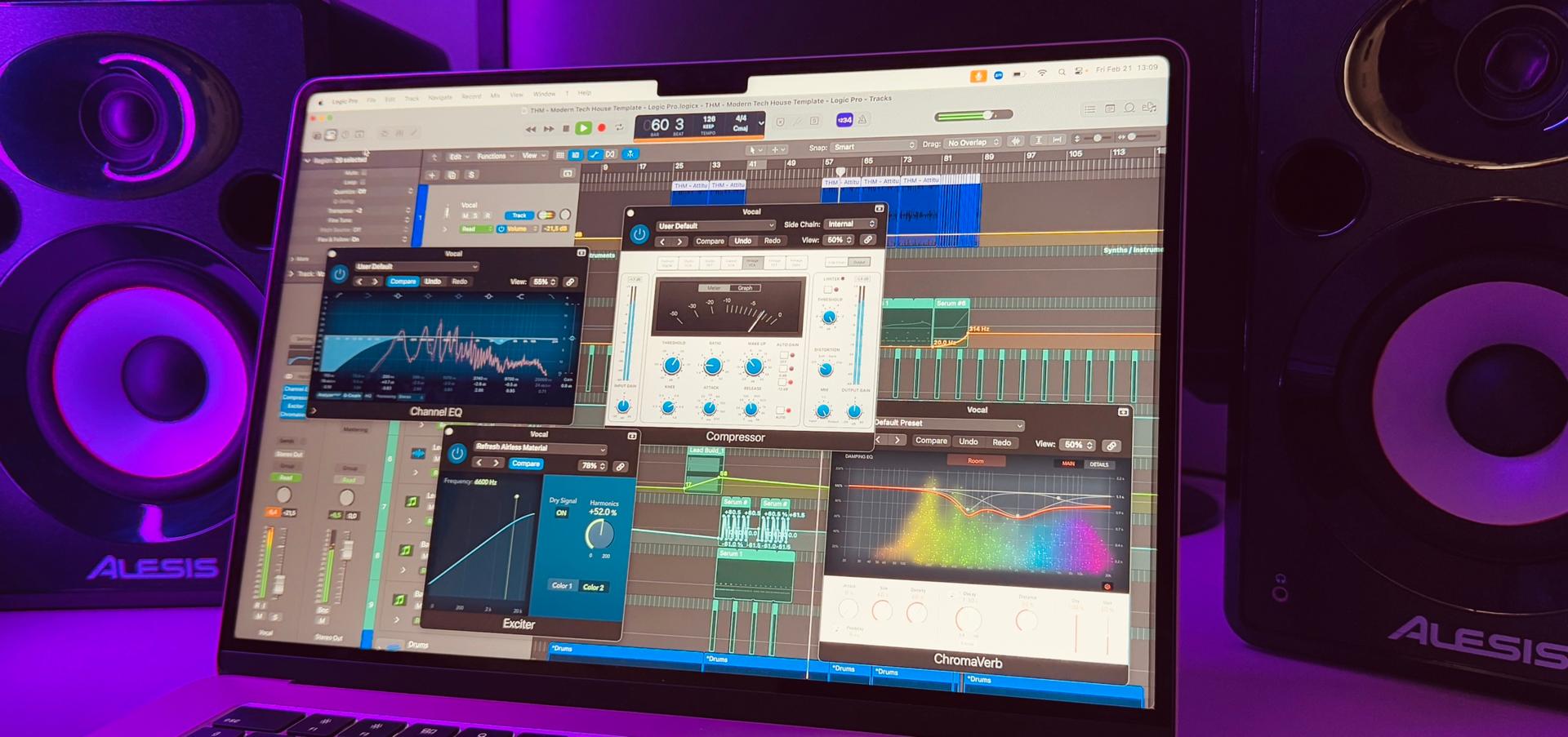
A great song can be carried by a powerful vocal performance, but how do we take a raw recording and make it shine? The secret lies in the vocal chain—a series of audio processors that shape, polish, and place the vocal perfectly in the mix. Here’s a look at my go-to process.
Step 1: The Foundation – Cleanup and Correction
Before we add any creative effects, we need a clean slate. This is the most crucial, yet least glamorous, part of the process.
- Noise Reduction: I start by removing any unwanted background noise—room hum, computer fans, or breath sounds between phrases. Tools like iZotope RX are indispensable for this, allowing surgical precision without affecting the vocal tone.
- Pitch Correction: Whether it’s subtle or for creative effect, pitch correction is a modern standard. I use tools like Melodyne or Auto-Tune Pro. The goal is to correct any minor imperfections while keeping the performance sounding natural and human. It’s about enhancing the emotion, not creating a robot.
Step 2: Shaping the Tone – EQ and Compression
With a clean vocal, we can now start shaping its character.
- Subtractive EQ: The first thing I do is carve out space. I’ll use a high-pass filter to remove unnecessary low-end rumble (usually anything below 80-100Hz). Then, I’ll hunt for and gently cut any “muddy” or “boxy” frequencies, typically in the 250-500Hz range. This instantly adds clarity.
- Compression: This is the key to a consistent and powerful vocal. I often use two compressors in series. The first is a fast-acting FET compressor (like a UAD 1176 emulation) to catch the sharpest peaks and control dynamics. The second is a slower, smoother optical compressor (like a Teletronix LA-2A) to add warmth and glue the performance together. This two-stage approach gives me tight dynamic control without squashing the life out of the vocal.
Step 3: Adding Dimension – Reverb and Delay
Now for the fun part: creating a sense of space and depth.
- Delay: A subtle slap-back delay can add thickness and presence without cluttering the mix. For a more modern pop sound, a stereo 1/8th or 1/4 note delay, filtered and tucked just behind the vocal, can create a beautiful sense of width.
- Reverb: I almost always use multiple reverbs. A short, subtle plate or room reverb helps the vocal feel like it’s in a real space. Then, for those big, soaring chorus moments, I’ll send the vocal to a larger hall or chamber reverb on a separate track that I can automate up and down. This gives the mix a dynamic journey from intimate verses to epic choruses.
By following this process, we can transform a simple vocal recording into a professional, polished, and emotionally impactful centerpiece for any track. It’s a blend of technical skill and artistic vision—the very essence of music production.